Friday, June 23, 2006

Summer and the Kitchen Garden


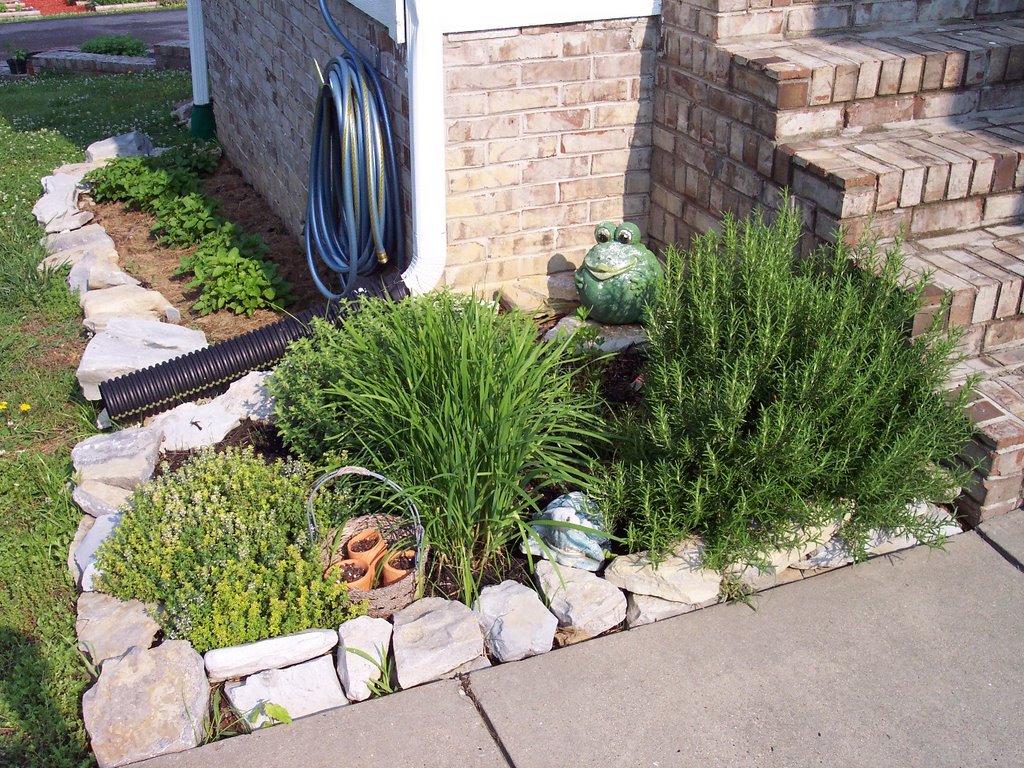
Being an herb grower, needless to say I have beds of herbs all over the place, and being an avid cook I spend a lot of time in the kitchen and I really like a small garden just as close to the kitchen as I can get it. This one is just outside my kitchen door, so I'm just a few steps away from whatever I need for a pot or a dish.

In the kitchen garden you should have rosemary, thyme, oregano, parsley, a few chives, some sage and dill. Herbs will grow very crowded so you really don't need much space. If at some point you feel they are too bunched together just cut something back very close to the ground and that will allow light and sun to reach the inside of the other plants before the new growth begins to come back.

Remember this is the month to cut and dry any excess you may have, just cut,dry by hanging or in a dehydrator and place in dark containers for the fall and winter, they make great gifts and just as tasty as fresh in your foods.

Have a Marvelous June week-end!

Bea Kunz
http://www.sagehillfarmsandvintagestore.com
EatWell-BeWell.

Wednesday, May 10, 2006

The Stevia Story

As a rule I like to write my own take on a subject, but this is such important information, I just didn't want to lose a single word that might reduce the overall message.

Thanks for reading!

Bea Kunz


A TALE OF INCREDIBLE SWEETNESS AND INTRIGUE

If you've ever tasted stevia, you know it's extremely sweet. In fact, this remarkable noncaloric herb, native to Paraguay, has been used as a sweetener and flavor enhancer for centuries. But this innocuous-looking plant has also been a focal point of intrigue in the United States in recent years because of actions by the U.S. Food and Drug Administration.
The subject of searches and seizures, trade complaints and embargoes on importation, stevia has been handled at times by the FDA as if it were an illegal drug.

Since the passage of the Dietary Supplement Health and Education Act (DSHEA), stevia can be sold legally in the United States, but only as a "dietary supplement." Even so, it can be found in many forms in most health-food stores, and is also incorporated into drinks, teas and other items (all labeled as "dietary supplements"). It cannot, however, be called a "sweetener" or even referred to as "sweet." To do so would render the product "adulterated," according to the FDA, and make it again subject to seizure.

The purpose of our Web site is to provide as much information about stevia as possible, from the scientific studies regarding its safety to the petitions submitted by the Lipton Tea Company and the American Herbal Products Association. Stevia.net will be an ongoing project for us at Body Ecology, so check back often, as we will be augmenting and updating this information frequently.


Why is the Center for Science in the Public Interest misleading the public about stevia? Contradictory comments and misleading statements are exposed: See story. Also: Commentary from the Providence Journal


Site byWishFishWeb

If you would like to know more about this article you can find it here: http://www.stevia.net

Sunday, May 07, 2006

May In the Garden.


May is here and the planting has begun!

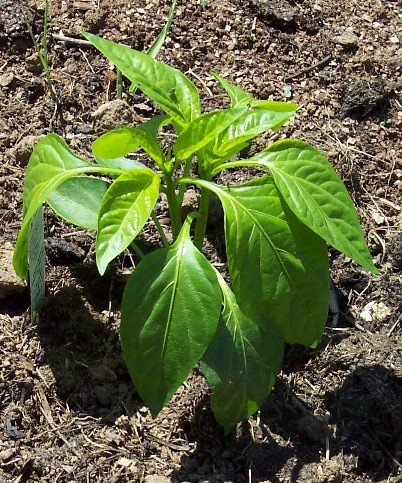
As badly as I have wanted to plant everything, It has not been warm enough to do so, until now....we have ventured out and put in some tomato and bell peppers.
These of course are in addition to the herbs. With the exception of Basil, herbs are pretty cold hardy and can be started much earlier. In fact they are all well on their way...I have actually already taken some cuttings from the thyme, oregano, and sage.

But, back to the vegetable garden.

If you haven't already done so, this is the time to lay your garden out on paper, get a good feel for what you wish to grow and where to want to grow it.
Nothing compares to having a plan and making it work.

I prefere the standard square for my garden, with a few spaces left in-between the rows for walking. Till the soil a few times and just let it sit between tillings.
This will help the soil to settle and fill in any open spaces left by the tilling.
It will also give the bugs and pest you don't want time to find another home.

So now the tilling and the moving is complete, you need to work in some good organic compost, nothing compares and as far as I'm concerned there is no good substitute.
Again let it sit for a few days and work it in again, breaking up any large clumps that need to be broken. A good garden fork is a must here.

Now your ready to lay your rows out, some folks mound them up, but to me that is just extra work, rain, working the soil, weeding, etc., just tears it down, so I'd skip that part. If you tilled enough and with the good composting, you really shouldn't have that many weeds. I'm not big on weeding!

Companion planting is a really good idea. Some plants make good neighbors for other plants and some don't.....kinda like the human species.

The reason being, they serve as a natural deterent to pest and disease that would otherwise attack the protected plant.

Oregano makes a good companion to plant next to Broccoli and Cabbages.
Garlic close by your Rose beds will keep aphids and Japanese beetles at bay.
Spinach with strawberries is very beneficial to the berries.

Do not plant Asian Cabbage next to regular cabbage, broccoli or cauliflower.
They are susceptible to many of the same pest and disease.

Beets grow well where peas and beans grew the year before, as these plants fix nitrogen in the soil.

You might wish to protect your dill patch from the rabbits and woodchucks, either can consume a full planting overnight.

Parsley worms can eat a full parsley plant or the leaves from your carrots in an hour. BUT before destroying them remember they are the larva of the beautiful Black Swallowtail Butterfly. ( I plant a small patch of parsley just for the them. When I find them on my garden plants, I just pick them off(with gloves)and move them to their own little garden, where they live happily until they fly into my garden.

Plant a garden, watch it grow and be blessed!

Bea Kunz
http://www.sagehillfarmsandvintagestore.com
Wednesday, April 26, 2006

Scented Geraniums

I have had a lot of request for information on "scented geraniums" they make for a wide and interesting subject indeed.
In their native habitat of 'The Cape of Good Hope' they are perennial's, but in most parts of the US they are grown as annuals or tender perennials.

The leaf texture of the SG can be smooth, sticky or velvety. The back of the leaf is what releases the scent for which each geranium is named.

They are well suited for growing in container's but do very well in the ground also. They thrive in sunny locations and need evenly moist soil, and they do much better from rooted cuttings than from seed.
It's a good idea to water several hours before you plan to take cuttings.

While there are well over 100 varieties of the SG , for culinary use the rose, lemon and mint are most in demand.

They do attract some pest and careful attention is required if you wish to have healthy and thriving plants. Caterpillar's, aphids, mealybugs, and whiteflies are just a few of the things you may find having lunch.

You can easily control the caterpillars by lifting off and placing some-place else.

I always grow an extra small patch of parsley for them to feed on.....they will turn into beautiful butterflies you know, so please never kill them.

The other pest you can wash away with diluted alc0hol and a Qtip.
A good insecticidal soap will work also.

If you need a good book about these lovely plants:

"Knowing, Growing and Enjoying Scented Geraniums" (by) Jim Becker and Faye
Brawner.

Happy Gardening.....

Bea Kunz

http://www.sagehillfarmsandvintagestore.com

Monday, April 10, 2006

April Do's In the Garden

April is such an awesome month, we are all so anxious to get started in the garden and mother nature is just as anxious to hold us back! I suppose because she knows her work isn't finished to put all things in place for good and abundant growing. It can really be a lesson in patience......

There are many things we can do in April that will help move things along rapidly when we do get the final go-ahead.

We can start pre-paring our soil for planting providing it isn't too wet....never work your soil when it's wet, it isn't a good thing for many reasons. This is a great time to get the weed problem under control if you have them. One good way to avoid that problem is to grow in raised beds. Another benefit is it gives your garden very good drainage.

This is a good time to lay out new locations, build beds, move plants to other locations, and do some snipping and pruning of certain things. Also time to sew seeds in transplant trays for later planting.

Another must have project is to start a compost pile if you don't have one.
It's never too late to do this......it's the best fertilizer you can find anywhere,
and of course if your growing by organic methods, compost is black gold!

I think April is my favorite month in the garden....not because it's the most beautiful time but because the options are so many......just dream it and you can do it !
I would love to hear from you and know what you are planning for your garden this spring.
We have added three new items for certain.....garlic, lavender and blueberrie's.

Sooooo if you are in our part of the country...please feel free to stop by and say hi.....we are most always home!

(Do you Know:) Oregano packs 42 times more antioxidents than an apple.

Eat a well balanced diet and don't get hung up on the paticulars. A variety of produce and whole grains and you'll get a good mix of nutrients.

Have an "Awesome April"......................

Bea Kunz/Sage Hill Farms

http://www.sagehillfarmsandvintagestore.com


Thursday, March 02, 2006

March in the Garden.

March is here at last and the gardens all around the country are waking from the long winter rest. In the south this the time we start getting little peeks of green here and there of lovely things to come.

In my gardens I have Rosemarys, Thymes, Oregano, Parsley, Chives and Sage, all just waiting for me to uncover them and give them my approval to welcome spring! But.......March is fickle, just when we think it has settled into nice warm days and all the cold is finally over-wham....a heavy frost. So, patience is a must if you wish to keep Jack Frost from having your beautiful plants for breakfast.

I use March to get aquainted with my gardens and my landscape again.
Walk it, get the feel of all the low and high spots. Maybe decide where you will put that special bed of something new you haven't grown before.

My hubby loves roses, so this year we are doing a rose garden, it will have a two fold purpose....one, because he likes them and enjoys seeing them grow. The other will be a tribute to both our mothers, who also loved them.
A memory garden.......now don't you have something or someone you could do a memory garden for?

Some herbs I will be growing this year that I haven't grown before are, garlic , and lavender. I am very anxious to get started and see how these two new members adapt to my garden.

A little note to remember about growing herbs, they do not require a lot of pampering, in fact, the less you tend them the better they will be.
Just give them good basic soil(compost)a fair amount of water(don't over water) herbs do not require as much water as vegetable plants do.

I'm also excited about my pumpkin patch this year, it will be small, but it's a start.
And the blueberry field, oh....I wish I had a 100 acres to plant !!

But that is for another time and topic.........you can grow a lot in a small space, so if you don't have much space, that doesn't mean you can't have a beautiful garden.....we will talk about that next time.

Happy Spring!

Bea Kunz
http://www.sagehillfarmsandvintagestore.com
Tuesday, February 14, 2006

Herbs as Medicine

Sage Hill is still under the winter sky, and this time of year a lot of people are sick. The common cold and allergie's just seem to be part of our routine.
My thinking is most of us need to work on our immune system's.
With our food supply being so lacking in good nutritional value, regardless how much we try, most of us do not get the proper balance of what it takes to keep our system operating in a healthy mode.
Stress is such a major factor in everyday life for most, just no way around it.......
and stress is the major culprit among all the threats to our immune system.

I'm certainly not a doctor(nor do I wish to be one)and I'm in no way advising anyone to stop medical treatment of any kind.........but, it's way past time for us to take more responsibility for our own health. I do believe we are faced with the fact that medical doctor's and pills, etc, isn't working for the majority.

We have to work on the cause, practice better maintance. Be aware, take control, fight back !

If your interested in a really good book on this subject; "Herbs for Health and Healing".......by "Kathi Keville" is one of the best I have read.
Published by "Rodale Press, Inc."

I'll repeat myself here at the risk of your rath....maintance is the key.
Discover herbs and the role they can play in your every day diet.
Used in a systematic way on a regular basis, it is the single most important thing you can do for your body, your mind , and your general well being.

Want to know more? Visit my web-site and sign up for "Sage Hill Farms" free
newsletter. http://www.sagehillfarmsandvintagestore.com

Have questions? Feel free to email me from my web-site, I will return your mail.

Thanks for reading,
Bea Kunz/Sage Hill Farms